
How to write with clarity
My 5 top tips

1. Think before you write.
Writing is simply articulating your thoughts in print.
But I repeatedly see content where the writer obviously failed to grasp this:
Lots of fluff
Purpose unclear
Complex language
Unnecessary repetition
The problem often isn’t poor English. Readers are prepared to put up with spelling and grammar errors, as long as your content is useful.
But readers won’t be patient when content wasn’t thought through.
The writing process starts long before you type.
2. Build your skeleton first.
Build your ‘skeleton’ (structure) before you write anything else:
What’s the big question you’re answering? That’s your (working) title.
What follow-up questions does that big question raise? Those are your (working) headings.
Put them in a sensible order. Then, one by one, answer the questions.
Taking this approach avoids many typical problems — lack of clarity, repetitive, unclear purpose, etc. If you have knowledge gaps, they’ll come to light in this ‘planning’ stage, and you can address them before you write.
Plus, answering a question avoids writer’s block and keeps your writing focused.
3. Start with short form.
On my first day in my first ‘proper’ job, my then-manager gave me a 300-page book to update on an infamously difficult topic.
Bear in mind I had neither technical writing nor industry experience (I was 21).
I felt so out of my depth, I wanted to cry. I thought: “If this carries on for a week, I’m quitting.” Fortunately, the next day, I was given a much easier task to work on instead. This was much shorter — a white paper. I still struggled, but got through it.
In hindsight, I’d have been much better off to start with tweets. Then blogs. Then papers. Then books. Short content is less intimidating and forces you to stick to the core points, keeping your writing focused.
Plus, the short feedback loop means you can put in more reps and improve faster.
4. Deliberate practice.
You can’t get to quality without quantity.
But quantity isn’t just about putting in the hours. We all know people a few years into their career who are as competent as their seasoned peers. (Which is why job adverts should specify skills, not ‘X years of experience’.)
That doesn’t reflect talent. It reflects how much deliberate practice they’ve done.
To improve as a writer, don’t spend most of your time reading or editing.
Spend it writing.
After I got serious about TTRH (February 2024), I wrote 100,000 words a month — and didn’t slow down until I resigned in November 2024. In those ten months, my writing improved more than in the six years prior of working as a professional writer.
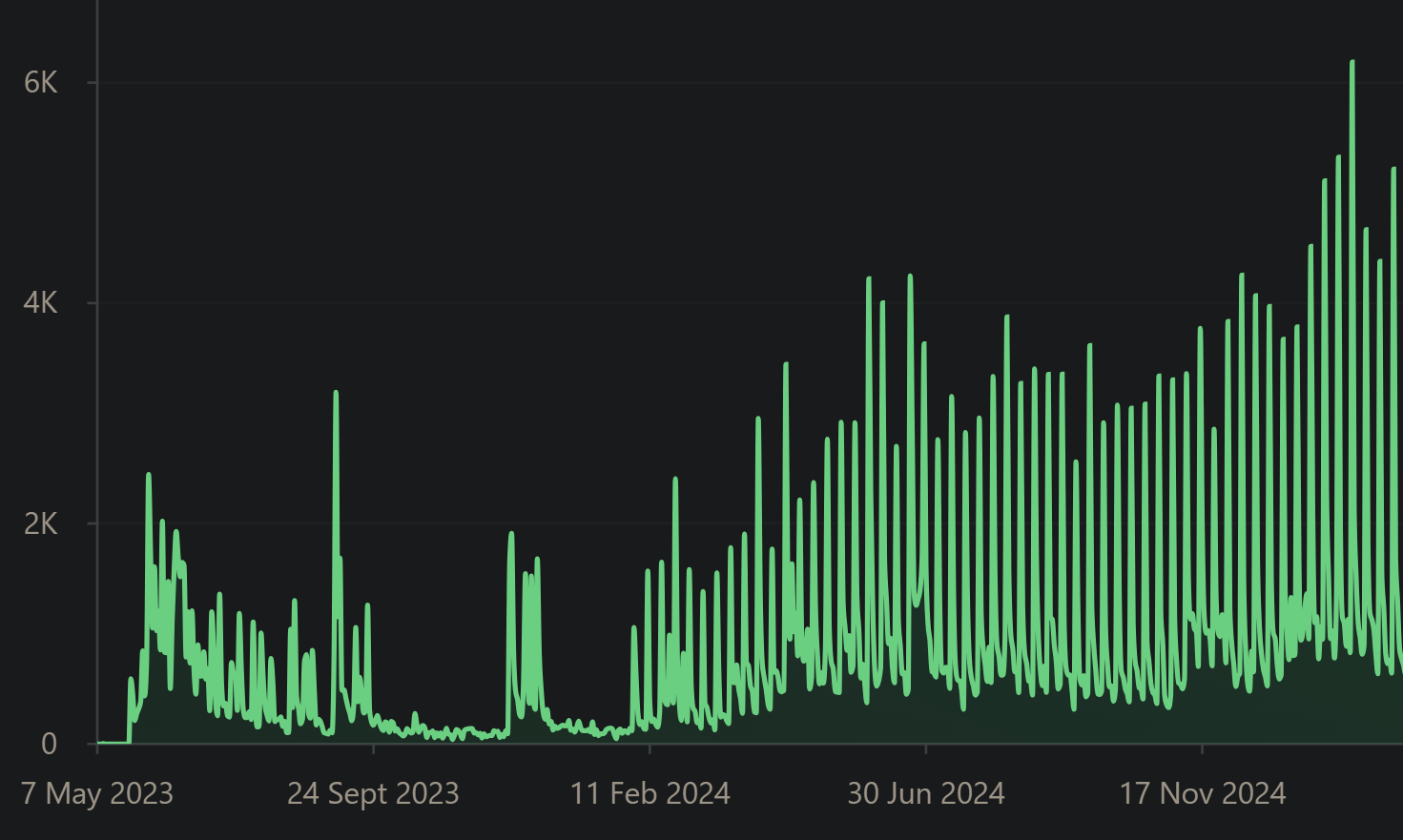
Since getting serious, I’ve also had more fun than in those first six years — at least, to my mind.
Learn to love practice.
5. If you’re stuck, take notes.
“I want to start publishing, but don’t know what to write about.”
If that’s you, start how I — and many others — did:
Share what you’ve learnt.
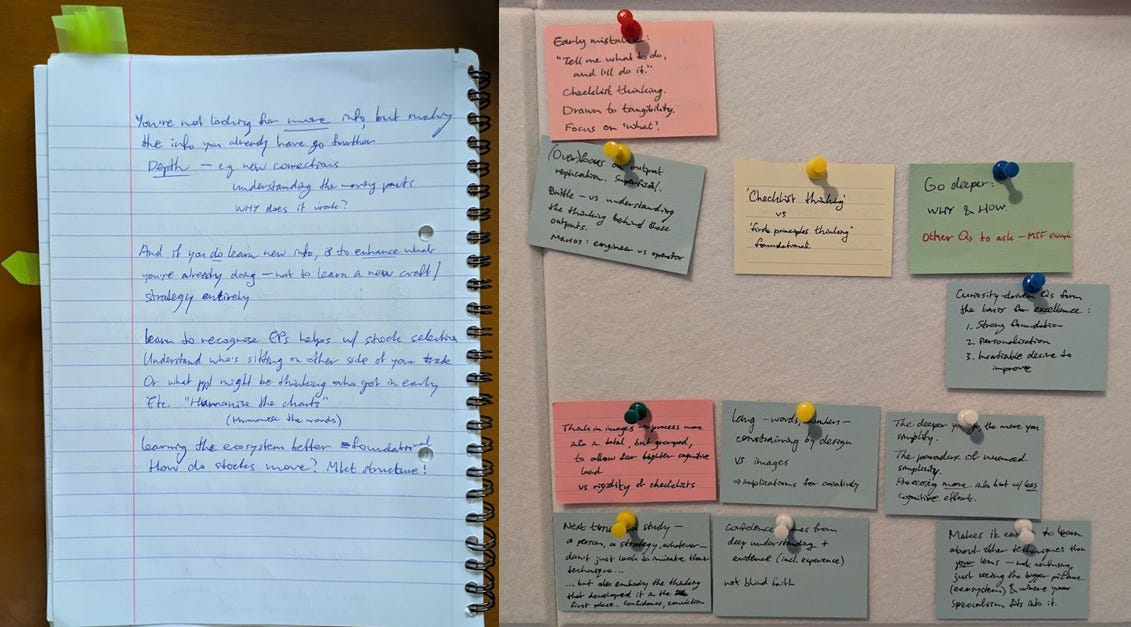
Note-taking, with a bit of personality, is lower friction than writing ‘from scratch’. That’s how TTRH started: with Qullamaggie stream notes. They later evolved into original content.
But that note-taking start generated the momentum I needed.
So, if you’re not ready to write ‘freely’, take and publish notes. And do it in a way that AI can’t. Outline:
What did you learn?
How will you apply those lessons?
Use a different resource (or person) as your cue.
You’ll know when you’re ready to ‘cut loose’.
- Kyna
Excellent set of tips here and what a chart on point 4!